
Strength Training for Gardening After 50
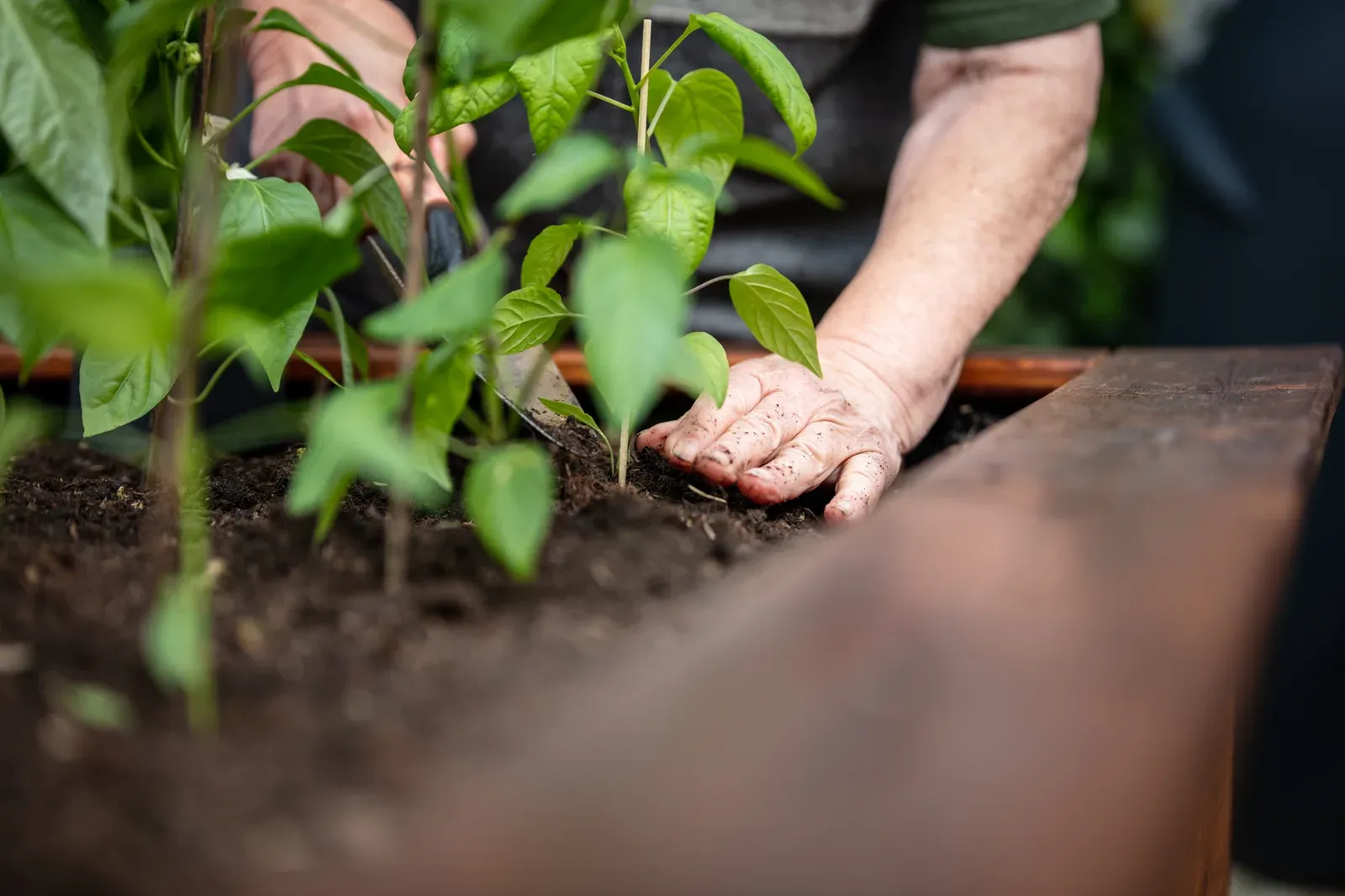
Yardwork strength training for adults over 50 comes down to one dominant pattern, the hip hinge, plus grip endurance and carrying capacity, because most gardening injuries trace back to a rounded back lifting a bag of mulch rather than to gardening itself being dangerous. Spring and fall are Indiana’s two intense yardwork windows, and a body that has trained the hinge pattern ahead of either one, built with a coach through a free consultation, handles both without the next day back pain that sends so many people to a chair for a week.
The lift that causes most yardwork back pain
Picture the moment: a bag of mulch or a full watering can at ground level, knees locked, back rounding forward to reach it. That single, repeated motion, a rounded back lift instead of a hip hinge, is behind an enormous share of the yardwork injuries that show up every spring and fall. It rarely announces itself the first time. It accumulates across a weekend of the same flawed pattern, then announces itself Monday morning as a back that will not straighten.
Why the hinge pattern is the fix
A hip hinge moves the load through the hips and hamstrings instead of the low back, keeping the spine in a neutral position while the strongest muscles in the body do the lifting. It is the same movement pattern trained in a deadlift, and it transfers directly: someone who has practiced hinging under a coach’s eye picks up a bag of soil the same protected way without thinking about it, because the pattern has become automatic rather than something they have to remember mid task. Training this pattern deliberately, with load that increases gradually over weeks, is the single highest value thing a gardener over 50 can do for their back.
Why this matters more after 50
Muscle mass typically declines with age unless it is deliberately trained, and connective tissue tolerates sudden loading less gracefully than it did at 30. That combination means the exact same rounded back lift that a 30 year old shrugs off can be the one that sidelines a 55 year old gardener for a week. None of this is a reason to garden less. It is a reason to spend a fraction of the off season building the strength that makes the activity itself safe, so the hobby stays a hobby instead of becoming a seasonal source of back pain.
Grip and carrying strength for the rest of the yard
Beyond the hinge, yardwork is full body carrying: hauling bags, moving pots, dragging hoses, wheeling a loaded cart across uneven ground. Grip endurance and trunk bracing under a carried load are what make an afternoon of that feel like light work instead of a grind, and both respond quickly to simple loaded carries trained a couple of times a week. The same carrying and grip work shows up as a factor in pickleball performance and in longevity research on grip strength alike, which is part of why it is worth training on purpose rather than only acquiring it by accident through the yard itself.
The overhead and kneeling work nobody mentions
Hinging covers the ground level lifts, but a real yard also asks for overhead reaching, pruning branches, hanging planters, and repeated kneeling and standing at flower beds. Shoulder strength and mobility trained through pressing and pulling patterns protects the overhead work the same way the hinge protects the ground level work, and building the strength to rise from kneeling without pushing through a sore knee is its own small but genuine quality, one that a coach can train directly with step ups and controlled squats rather than leaving it to chance. None of this needs to be complicated. It needs to be trained on purpose instead of only rehearsed, unpracticed, on the one weekend a year the whole yard gets attention at once.
Training around two intense seasons, not year round
Indiana’s yardwork calendar is not steady. Spring cleanup and fall cleanup are the two demanding windows, with a quieter maintenance stretch between them and a genuine off season once the ground freezes. That rhythm is a gift for training, since the weeks before each season are exactly when a short, focused block of hinge, carry, and grip work pays off, timed to peak strength right as the first big spring weekend or the fall leaf cleanup arrives. Anyone who spends summer on Geist or Morse or fall in a tree stand is training overlapping balance and carrying qualities, one more reason consistent off season strength work outlasts any single season it was built for.
What this training looks like
A coached hour built for this goal spends real time on hinge patterns, deadlift variations and their easier regressions, progressed carefully and loaded gradually so form holds up under real weight. Loaded carries and grip work round it out, along with some rotational and anti rotation core strength for the twisting reach that raking and digging both ask for. None of it requires special equipment beyond what a standard private suite already has, a rack, dumbbells, and a cable system, and a free consultation is where a coach builds that plan around your actual yard and your actual spring or fall timeline, starting from an InBody baseline rather than a guess.
The same hinge and carrying strength that protects a back in the garden protects it everywhere else too, which is the quiet argument for training it deliberately instead of waiting for a bag of mulch to make the case for you.
Related questions
Do I need to lift heavy to protect my back from yardwork?
No. What matters most is the pattern, hinging at the hips instead of rounding the back, trained with load that increases gradually. Moderate, well coached loading builds that pattern faster than heavy, poorly supervised lifting ever would.
How soon before spring cleanup should I start training?
Six to eight weeks gives the hinge pattern and grip strength time to become automatic before the heaviest lifting of the season. Starting the week before a big cleanup weekend leaves the pattern untrained exactly when it matters most.
Is this training different from general strength training?
It shares the same foundation, but a coach can bias the exercises and loading toward hinging, carrying, and grip work specifically, since those are the qualities yardwork actually tests rather than a generic full body routine.