
What Is Phase Angle on an InBody Scan?
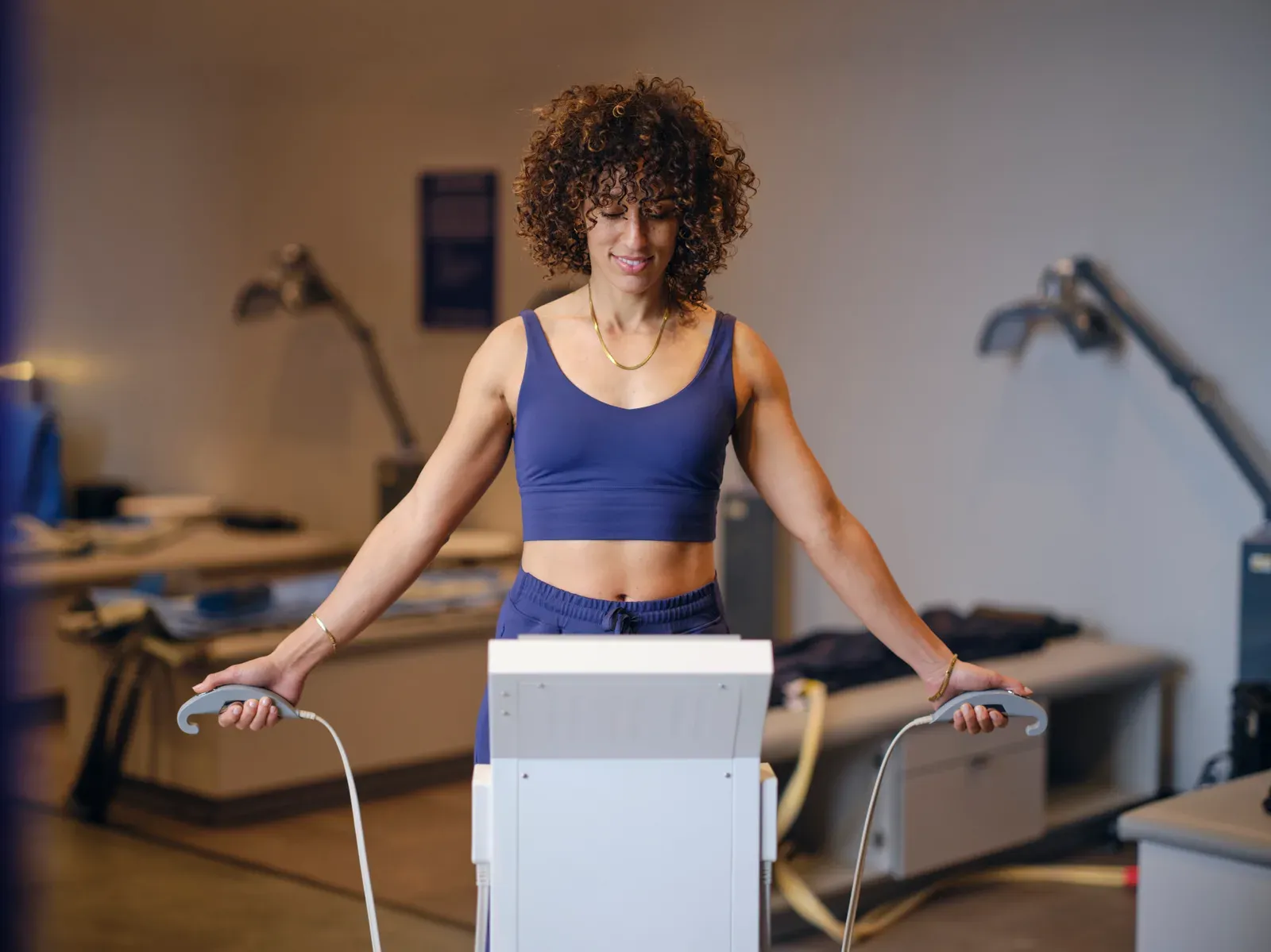
Phase angle on an InBody scan is a raw electrical reading that reflects the health and quantity of your cells: the manufacturer’s education materials commonly place healthy adults around 5 to 7 degrees, with the number drifting lower with age and rising as you add muscle. It is not a fat number and not a fitness score. Think of it as the one line on the sheet that describes the quality of your tissue rather than the amount, which is why coaches watch it slowly and why a value that falls for no reason belongs in a conversation with your physician. If you want to see yours, the free consultation at FlexWerk in Carmel includes the scan that prints it.
What phase angle actually measures
The number comes from how your cells delay the electrical signal, not from any equation about fat. The scanner sends a gentle current through your body; cell membranes behave a little like tiny capacitors, briefly storing the charge and releasing it, which shifts the timing of the signal. That timing shift, measured in degrees, is the phase angle. Intact membranes and a large volume of healthy cells produce a bigger shift, so more muscle and well-nourished tissue read as a higher angle, while fewer cells or stressed membranes read lower. Because it is a direct reading rather than a modeled estimate, it is one of the few figures on the sheet that does not depend on population equations. It still depends on hydration, which is the caveat that follows it everywhere.
Typical ranges, and why yours might sit lower
Most healthy adults land somewhere between roughly 5 and 7 degrees, commonly a little higher in men than in women and gradually lower across the decades. Several ordinary things push the number down without anything being wrong:
- Age. Cell mass and membrane quality decline slowly from midlife onward, so a 68-year-old reading in the low 5s can be entirely normal for that age.
- Low muscle mass. Fewer muscle cells means less capacitance, which is why under-muscled adults of any age tend to read low.
- Dehydration or a hard session earlier that day. Fluid shifts change the reading enough to move it a few tenths.
- Illness, poor sleep or a long stretch of inactivity. Membranes reflect stress faster than muscle mass does.
The physician line is not decorative here. A low or falling phase angle alongside unexplained fatigue, weight loss, swelling, a chronic condition or a medical treatment is a clinical question, and no coach should interpret it for you. Bring the printout to your physician and let them decide whether it means anything.
What training does to the number
Consistent resistance training raises phase angle, slowly, because it adds muscle cells and improves the condition of the ones you have. The change is measured in tenths of a degree across months, not whole degrees across weeks, so the honest expectation is a gentle upward drift on rescans taken under matched conditions. Protein spread through the day, adequate sleep and recovery from illness all support the same direction. The skeletal muscle mass line usually moves first and more visibly; phase angle tends to confirm it a scan or two later.
How a coach reads it beside the rest of the sheet
A coach treats phase angle as a witness, not a target. It corroborates the muscle line: rising SMM with a rising angle means the new tissue is real and well-hydrated, while rising SMM with a flat angle invites a closer look at how the scan was taken. It also flags noise, since a sudden drop with no change in training usually points at dehydration, a salty dinner or a session too close to the scan, the same culprits behind an unexpectedly high ECW ratio. Nobody programs a workout around a phase angle; they program strength work, protein and sleep, then watch the number agree. The rest of the printout is decoded in InBody scan results explained.
If you have never seen your own phase angle, the shortest route is a baseline scan at Carmel City Center and a rescan a few weeks later to watch which way it moves.
Related questions
Is a phase angle of 5 degrees bad?
Not on its own. Around 5 sits inside the range commonly cited for healthy adults, and it is ordinary for older adults and for people with less muscle. It becomes a question for your physician only if it keeps falling or arrives with symptoms.
Can I raise my phase angle in 90 days?
Consistent strength training and better sleep and protein habits commonly nudge it upward over a few months, usually by tenths of a degree. Nobody can promise a specific figure, and a rescan under matched conditions is the only fair way to judge it.
Why is my phase angle lower than my spouse's?
Sex, age, muscle mass and hydration all move it, so two healthy people in one household commonly read a degree apart. Compare your number to your own last scan, never to someone else's.