
Does Fall Prevention Training in Carmel Actually Reduce Risk?
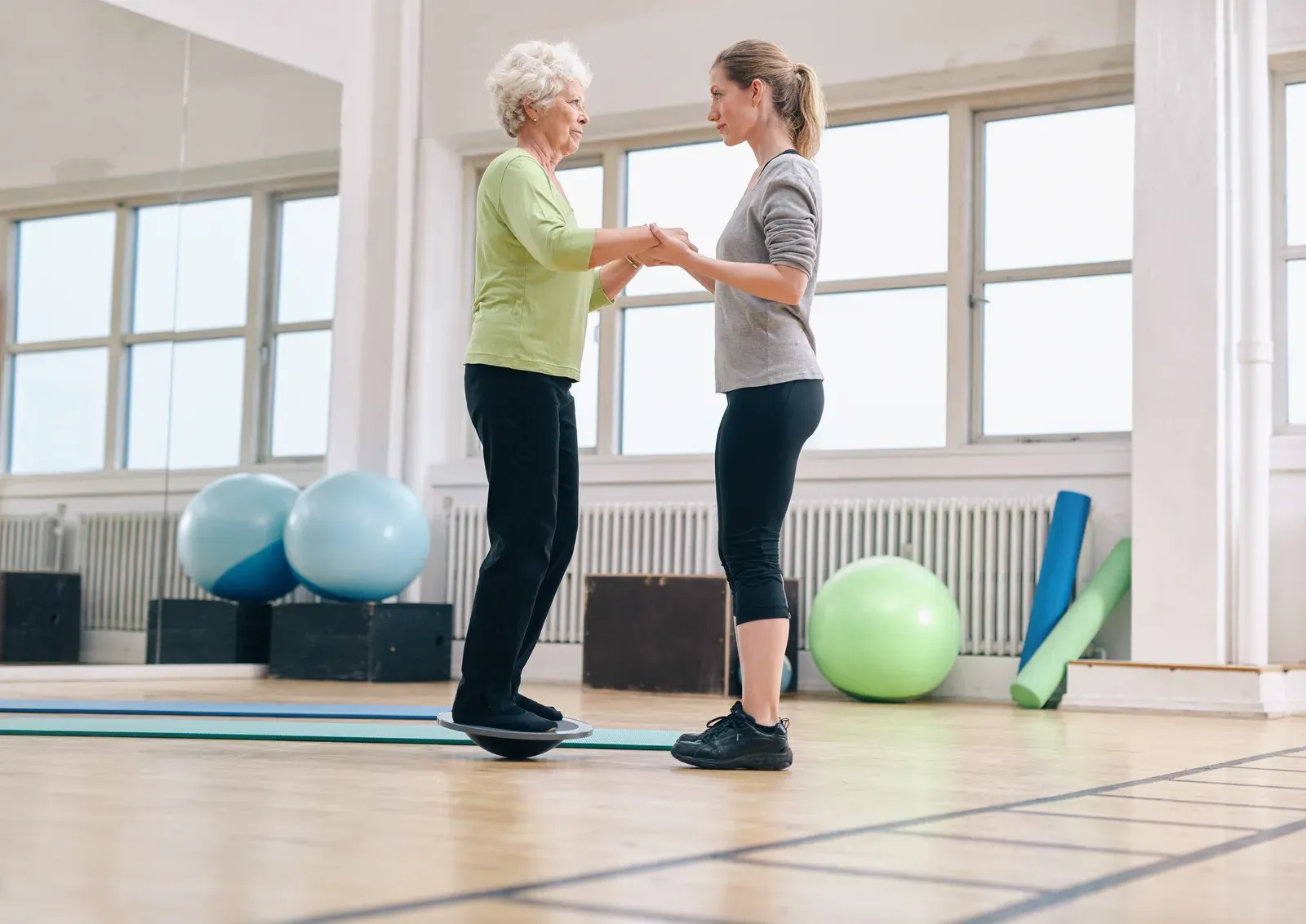
Falls are not an inevitable part of aging: structured strength and balance training reduces fall risk substantially, and that finding is among the most consistent in all of exercise research. The two things that predict falls best, leg strength and balance, both respond to training at any age. In Carmel, that work happens one on one behind a closed door at FlexWerk in Carmel City Center, starting with a free consultation that includes a free body-composition scan.
Start with the physician, not the gym
The medical conversation comes first, because falls can have causes training does not touch. Dizziness, fainting, a recent fall, or new medications all warrant a physician visit before any program begins, and good coaching runs alongside your clinical team rather than in place of it. What a coach addresses is the physical spiral: legs weakening, balance eroding, confidence shrinking, and each feeding the next. “Just be careful” accelerates that spiral, since caution leads to moving less, and moving less is what makes the next stumble a fall. If Medicare-linked fitness benefits are part of how you plan to pay for activity, how those benefits interact with personal training is worth five minutes.
What the program actually trains
Four components show up in every well-built fall prevention plan. Leg strength and power, through sit-to-stand progressions, step-ups, and supported squats on the room’s rack and dumbbells, with power trained deliberately because catching a stumble is a fast act. Balance under increasing challenge, from supported stands through single-leg work with head turns and reaches, always with the coach within arm’s reach; the full progression lives in the balance training guide. The recovery step, rehearsed stepping drills that turn a trip into a story instead of an injury. Floor confidence, practicing getting down to the ground and back up, which quietly removes one of the biggest fears older adults carry.
Why the private room matters here
Almost nobody wants to practice wobbling or floor get-ups in front of a gym crowd, and for many older adults that embarrassment is the single reason prevention never starts. At FlexWerk the entire session happens in a reserved private suite, one on one with a coach matched through FlexConnect from more than 40 independent professionals, and you can specifically request experience with older adults. Dignity is not a side benefit of this program; it is frequently the feature that makes the program happen.
Starting in Carmel, for yourself or a parent
The logistics suit the demographic. Garage parking sits a short walk from the door at 885 Monon Green Blvd, quiet midday appointments are easy to find within the 5 AM to 9 PM weekday schedule, and the indoor setting holds steady through an Indiana winter, when roughly 22 inches of annual snow turns driveways into exactly the hazard this training targets. Many inquiries come from adult children arranging coaching for a parent, and attending the consultation together works well: a conversation, a baseline scan, a look at the room, no commitment. For the wider question of building strength later in life, it is not too late at 70, and the senior fitness page covers the full coaching picture. The strongest version of prevention begins before the first fall, and today qualifies.
Related questions
How much can training reduce fall risk?
Exercise research consistently finds that structured strength and balance programs cut fall risk substantially, making them among the best-supported interventions available. No program eliminates risk entirely, and anyone promising that is overselling.
Is fall prevention training safe for someone who already feels fragile?
Yes, when it is coached and progressed properly. Work begins supported, a coach stays within reach, and difficulty rises only as capability does. Clear it with your physician first, especially after a previous fall.
Can I arrange this for a parent?
Yes, and many people do. The free consultation is a comfortable first step to attend together, and coach matching can prioritize professionals experienced with older adults.