
Exercise With Hashimoto's: Training Around the Fatigue
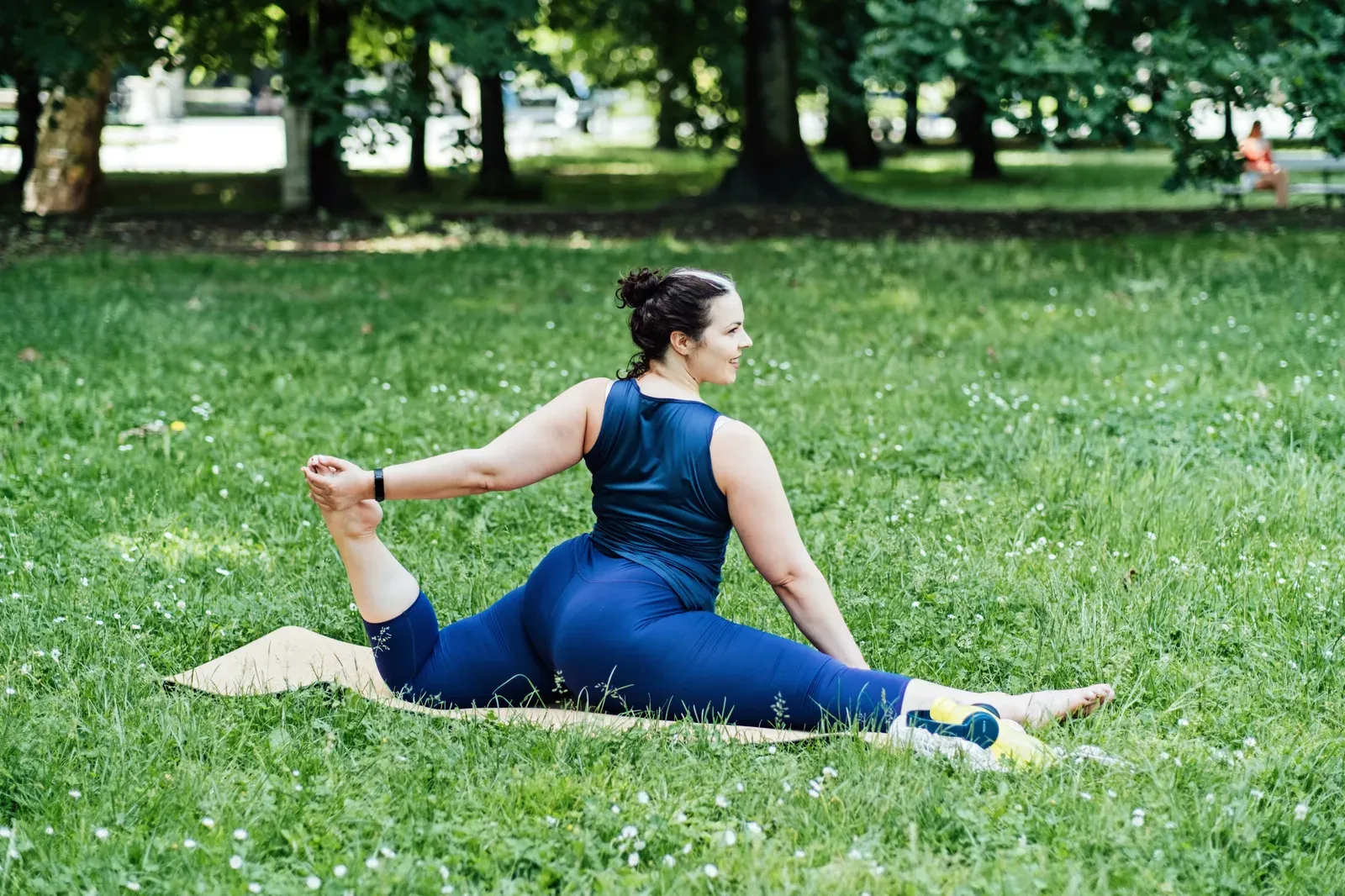
Exercise with Hashimoto’s works when the medical side is settled first and the training side is built to flex: your physician manages the thyroid and the medication, and a coach programs strength that expands on good weeks and shrinks on flat ones without ever disappearing. Nothing about diagnosing, dosing or interpreting your labs belongs in a gym, and a trainer who offers opinions on any of it has told you what you need to know. What belongs in a gym is the quiet, steady work of keeping muscle, warmth and stamina while the fatigue comes and goes. At FlexWerk in Carmel, that begins with a free consultation where your physician’s guidance is the first thing on the table.
Why fatigue with Hashimoto’s needs its own plan
An underactive thyroid changes the shape of tiredness, and a program written for ordinary tiredness misreads it. Many people describe energy that arrives in waves rather than a straight line, that shifts for weeks after a medication adjustment, and that punishes a hard session a day later instead of the same afternoon. Cold sensitivity, achy joints and slower recovery often ride along. Generic advice, push through and it gets easier, tends to produce the opposite: a big week, a crash, a month off, then the same cycle from a lower starting point. Fatigue-aware training assumes the waves exist and plans for them in advance.
How a coach reads the day before writing the session
The working tool is a two-version session. Every workout on the plan has a full version and a short version, and the first five minutes decide which one you are doing today. The signals a coach reads are simple: how the warm-up feels compared with last time, whether the first working set moves at its usual speed, how your sleep went. Autoregulation like this runs on the RPE effort scale rather than fixed weights, so a flat day simply means lighter loads and fewer sets, logged without apology. The short version is still a real session: a squat pattern, a hinge, one push, one pull, twenty minutes, done. Momentum is protected, and nothing has to be rebuilt from zero after a rough stretch. If flares rather than waves describe your pattern better, the tiered day-rating approach in strength training with lupus translates directly.
Why strength earns the scarce energy
When energy is limited, the question is what to spend it on, and the answer is muscle. Low activity and fatigue take muscle first, and muscle is what makes everyday effort feel lighter, keeps you warmer through an Indiana January, and supports the metabolic picture your physician is already watching. Two brief strength sessions a week deliver that signal. Long, hard cardio delivers a different signal, one that many people with Hashimoto’s find deepens the fatigue rather than lifting it, so the conditioning side stays easy: a walk on the Monon Trail, a relaxed row, nothing that leaves a debt. The same shrink-the-session logic serves people managing other fatigue-shaped conditions, like training after long COVID, where pacing beats pushing every time.
The division of labor is fixed. A coach programs, adjusts on the day and keeps you consistent. A coach never interprets symptoms, comments on medication or decides whether new fatigue is a training problem; that judgment goes to your doctor every time.
Questions to ask your physician before you start
Bring these to the appointment, and bring the answers in writing to the consultation:
- Is my thyroid treatment stable enough right now for progressive strength training?
- Do you want any limits on intensity, heart rate or session length while my dose is being adjusted?
- Are there joint, heart or blood pressure considerations you want a coach to know about?
- What changes in energy, temperature tolerance or recovery should I report to you rather than push through?
- Is anything else being checked, and should I wait for those results before I begin?
Where the flexing happens in Carmel
A program that changes shape on the day needs a room that allows it. At Carmel City Center, sessions run one on one in a reserved private space with a rack, a cable system and dumbbells that are yours for the hour, so a twenty-minute short version is not an awkward exit past a crowded floor; it is simply the session. Weekday hours from 5 AM to 9 PM let the appointment sit in whatever window your energy favors. The free consultation includes a free InBody body composition scan, a muscle baseline that gives you something to track besides how tired you feel, and FlexConnect can match you with a coach who is comfortable working alongside physician guidance. If your thyroid care is stable and your doctor says train, bring their answers and start with the short version.
Related questions
Can exercise fix Hashimoto's fatigue?
No. The fatigue is tied to thyroid function and the autoimmune process, both of which your physician manages. What training can do, once your care is stable, is keep muscle and stamina from eroding underneath the fatigue, which many people find makes ordinary days easier.
Should I train when a dose change leaves me wiped out?
Ask your physician how they want you to handle exertion while a change settles. Inside their answer, a coach usually shrinks the session rather than cancels it, and any fatigue that is new, severe or worsening goes back to your doctor rather than into the training log.
Is strength training or cardio better with an underactive thyroid?
Most coaches lead with short strength work, because muscle is the tissue that fatigue and low activity take first, and a 25-minute session asks less of a tired body than a long run does. Easy walking covers the rest until energy allows more.