
Cheer Strength Training in Carmel: Stunts and Landings
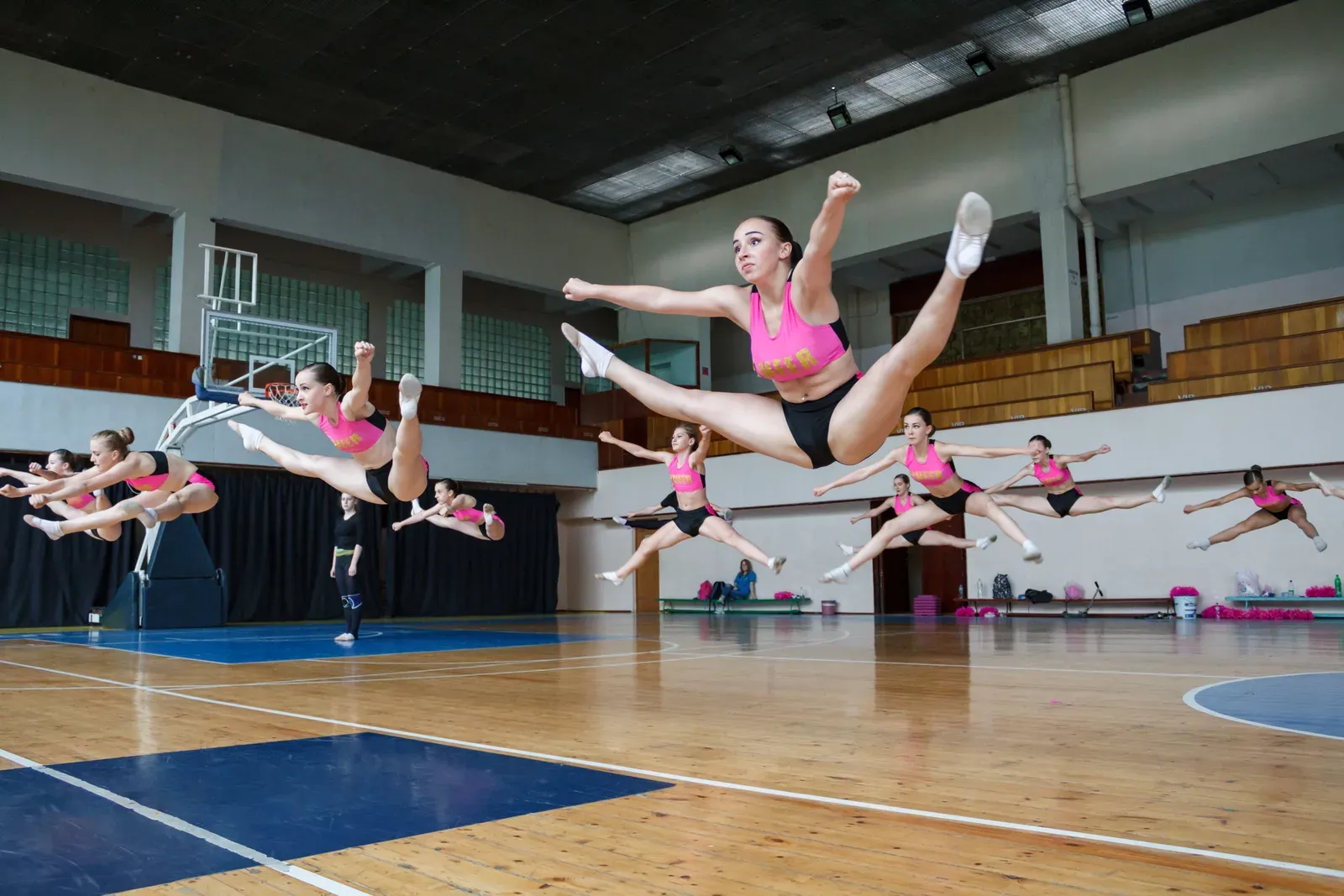
Cheer strength training starts with the stunt, not the tumbling pass: bases and backspots need overhead pressing and grip strength to hold a flyer steady, flyers need the trunk and single-leg stiffness to be held, and every athlete on the mat needs landing mechanics that absorb force through the hips instead of the knees. Most cheer conditioning happens at the cheer gym, in the sport’s own shapes, which is exactly why the strength underneath it stays undertrained. In Carmel, a coached hour a week fills that gap, and it begins with a free consultation where a coach meets the athlete, runs a free InBody body composition scan and asks which position they actually hold.
Bases, flyers and backspots train different problems
A cheer squad is three different athletes wearing one uniform, and a program that ignores the position wastes half the hour.
| Position | What the stunt demands | The gym version |
|---|---|---|
| Base | Pressing a moving load overhead, catching it, holding it still | Overhead press progressions, front-loaded squats, farmer and front carries, wrist and forearm loading |
| Backspot | Pulling and stabilizing from behind, absorbing a cradle | Rows, hinge strength, upper-back volume, controlled catches with light loads |
| Flyer | Staying rigid while someone else moves you | Single-leg stance under load, isometric trunk holds, ankle stiffness, hip strength through full range |
None of this needs heavy barbells. A base who can press a pair of moderate dumbbells overhead with a still trunk, then hold them there, has practiced the exact skill an extension asks for. A flyer who can stand on one leg with a load in the opposite hand and not wobble has trained the thing that makes the whole stunt feel light.
Landing mechanics without a spring floor
The suite trains landings; the cheer gym trains tumbling, and the two should never be confused. A private FlexSpace holds a lifting rack, cable system, dumbbells and a bench. It does not hold a spring floor, and no coach here will run a tumbling pass in it. What a coach can do is teach the athlete to land: step-offs from a low box into a stuck, quiet landing, hips back and knees tracking over the feet; loaded jumps that build the deceleration strength a basket toss spends; single-leg landings for the moments a cradle goes sideways. Those reps transfer directly to the mat because the landing is the same event, only slower and watched.
That sequencing matters more for this sport than most. A cheer athlete may take dozens of hard landings in one practice, and the athlete who owns a landing pattern before the season gets loud is the one still competing in February.
Wrists, shoulders and the overhead problem
Cheer loads the wrist and shoulder in ways few other youth sports do: handstands and walkovers put body weight through extended wrists, and bases catch falling weight overhead all season. Strength work for the forearm and the rotator cuff, plus pressing progressed carefully from the bench up, builds the tissue capacity those jobs require. Pain is a different category. A wrist that aches on every handstand or a shoulder that clicks under load goes to a physician or the school’s athletic trainer before it goes into a program, and the coach then works alongside whatever the clinical team says, the same arrangement we describe for gymnasts, whose wrists carry a similar load.
When to build and when to hold
The cheer calendar sets the training calendar. Sideline season arrives with the fall practice window in early August and runs through football, and competition season follows through the winter, which leaves late spring and summer as the honest building block: two coached sessions a week, loads climbing, landing work progressing. Once routines are being performed every week, the program drops to one short maintenance session with nothing new introduced, because a sore athlete on a performance day was the wrong session, a rule shared with dance and pom athletes. Tryout season in spring sits at the seam between the two, and it is the best reason to start the building block early.
The room and the booking
Sessions run one-on-one, or with two to four teammates sharing the hour, in a reserved private suite at Carmel City Center, 885 Monon Green Blvd, with a parent welcome in the room and garage parking a short walk away. Hours cover the cheer schedule, 5 AM to 9 PM on weekdays and 7 AM to 4 PM on weekends, so a session can sit before school or between practice and dinner. FlexConnect matches the athlete with one of the more than 40 independent professionals based here; ask for youth performance experience and name the position. Jump-sport athletes who also play volleyball will recognize the landing logic from our volleyball page, and the broader youth rules, supervision on every rep and technique before load, are laid out in our youth athlete guide.
If your athlete’s stunts depend on strength nobody is training, book the consultation and give the base, the flyer or the backspot the hour their position deserves.
Related questions
Can a coach work on my cheerleader's tumbling in a private suite?
No, and a good one will say so. A private suite has a rack, cables, dumbbells and a bench, not a spring floor, so tumbling skill stays with the cheer gym. What the suite does is build the leg strength, trunk stiffness and landing mechanics that make every pass safer and stronger.
Do flyers need strength training or just flexibility?
Both, and flyers are usually short on the first. Holding a body position at the top of a stunt is an isometric strength task through the trunk, hips and ankles, and single-leg strength decides how steady a liberty feels to the bases underneath.
How often should a cheerleader lift during competition season?
One short session a week, sometimes two, at loads that never leave soreness on a performance day. The heavy building happens in late spring and summer; in season, the job is holding strength while routines stay sharp.