
Exercise After Vertigo: Rebuilding Balance and Confidence
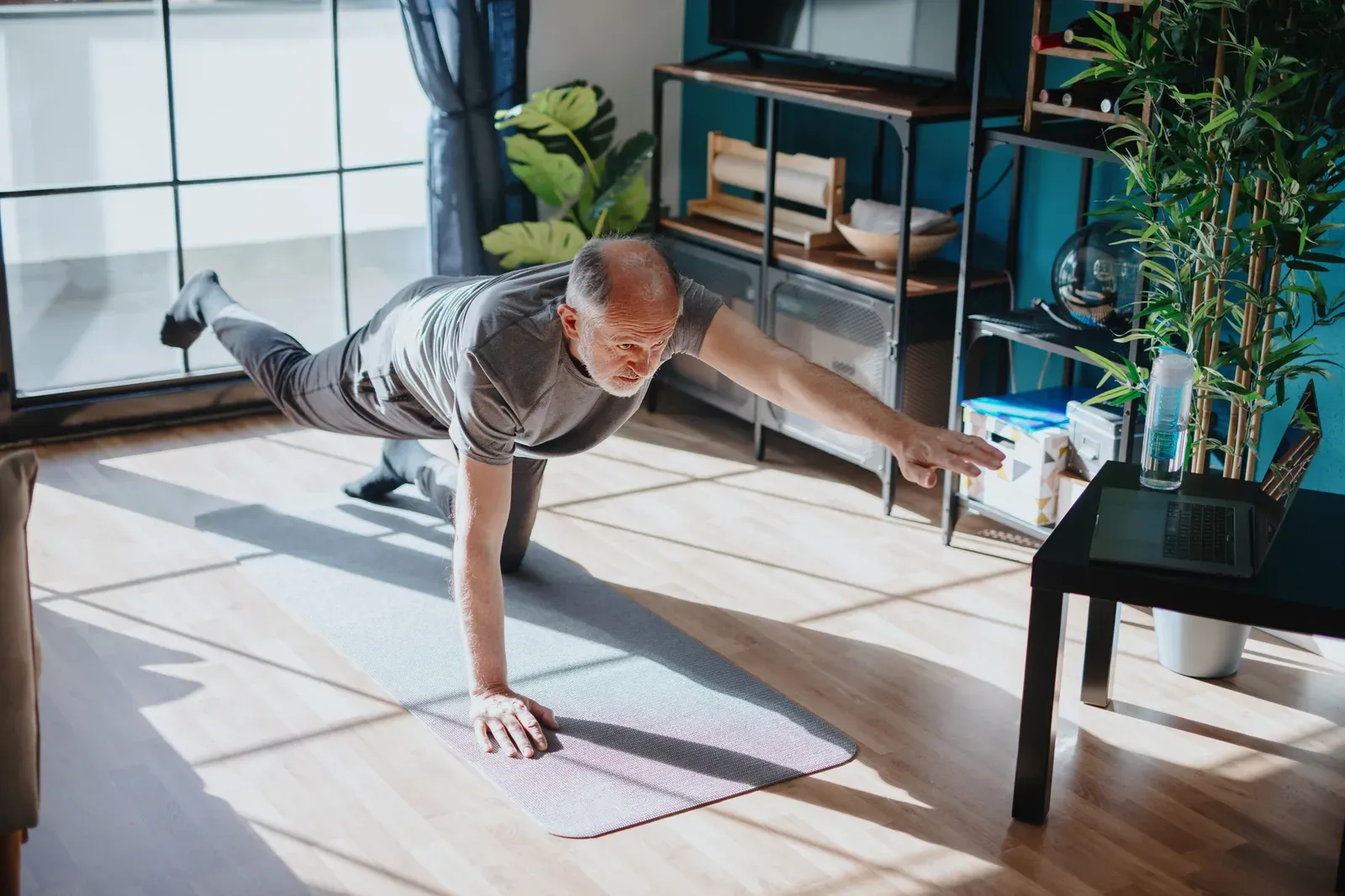
Exercise after vertigo has a strict order: your physician identifies the cause and treats it, a vestibular physical therapist handles any prescribed rehabilitation, and only then does a coach rebuild the strength and confidence the episode took. Vertigo is a symptom with many possible sources, several of which need specific medical attention, so no responsible trainer touches it. What a trainer can restore is the downstream damage: weeks of moving carefully leave legs weaker, steps slower and nerves frayed, and that part is trainable. At FlexWerk in Carmel, that rebuild begins with a free consultation where your clinician’s guidance sets every boundary.
What belongs to your clinical team
The cause of vertigo decides what happens next, and finding it is medical work. Many episodes trace to the inner ear, some to other causes entirely, and treatment ranges from a repositioning procedure in a clinic to medication to a course of vestibular rehabilitation with a physical therapist. Those vestibular exercises, the deliberate head movements and gaze drills that retrain the system, are prescribed and progressed by the physical therapist, and a coach neither copies them nor competes with them. If you are still in that phase, more physical therapy is the right move, and coaching waits. The scope line is the same one drawn in trainer versus physical therapist.
What a coach rebuilds afterward
Once cleared, the coaching target is confidence built on evidence. A body that spent weeks avoiding sudden movement has usually lost three things: leg strength, the quick catch-step that saves a stumble, and trust. Sessions rebuild them in that order. Sit-to-stand work, supported split squats and step-ups restore the strength; stepping drills with a rack within reach restore the reaction; and the record of what you did steadily last week restores the trust. The same graded, supported method that helps people who are afraid of falling again applies here, and the broader progression from static holds to reactive work is laid out in coached balance training.
Early sessions respect whatever precautions your clinician set. If quick head turns, bending forward or lying flat are on the avoid list for now, the coach chooses positions that skip them: incline presses instead of flat, cable work instead of floor work, slow transitions between standing and sitting. Head movement gets folded into balance drills only when your physical therapist or physician says it can, never as a coach’s experiment.
Why a calm room helps a settling system
Big open gyms are visually loud: moving people, flashing screens, bright overhead light, reflections everywhere. For a vestibular system still settling, that is a lot to process while trying to stand on one leg. A reserved private room at Carmel City Center removes the traffic, and the lighting adjusts to what feels comfortable, so the only moving thing in view is your coach. The building sits at 885 Monon Green Blvd with garage parking a short walk away, useful when a long walk across an open lot still feels like a test. Winter raises the stakes locally: with around 22 inches of snow a year, icy steps and driveways are exactly the scenario the stepping drills rehearse against.
Questions to ask your physician or physical therapist first
- Has the cause of my vertigo been identified, and is it treated or still being managed?
- Am I cleared for strength and balance training, and are there movements or positions to avoid for now?
- Should I complete vestibular rehabilitation before adding coached sessions, or can they overlap?
- What would a recurrence during exercise mean, and who do I call?
- Are there medications in my plan that affect balance or blood pressure when I stand?
What a coach does and does not do
A coach programs supported strength, keeps a hand within reach during balance work, progresses only on demonstrated steadiness and stops for anything that feels like the vertigo returning. A coach never diagnoses, never prescribes vestibular exercises, and never asks you to test a symptom. The free consultation includes a free InBody scan for a strength baseline, and FlexConnect can match you with one of the building’s independent coaches who has worked alongside physical therapists before. If your clinician has cleared you, bring their answers and start supported.
Related questions
Can a personal trainer treat vertigo?
No. Vertigo has a range of causes, some of which need specific medical treatment, and the exercise-based side of care belongs to a vestibular physical therapist. A trainer works on strength and steadiness after clearance, never on the vertigo itself.
What if the room spins during a session?
The session stops, you sit or lie down safely, and your physician hears about it before training resumes. A coach never tries to work through a vertigo episode or judge what caused it.
Is it safe to lift weights after vertigo?
For many people it is, once cleared, with early sessions avoiding quick head turns, lying flat and fast position changes if your clinician asks for that. Loads start light and supported and grow as steadiness returns.